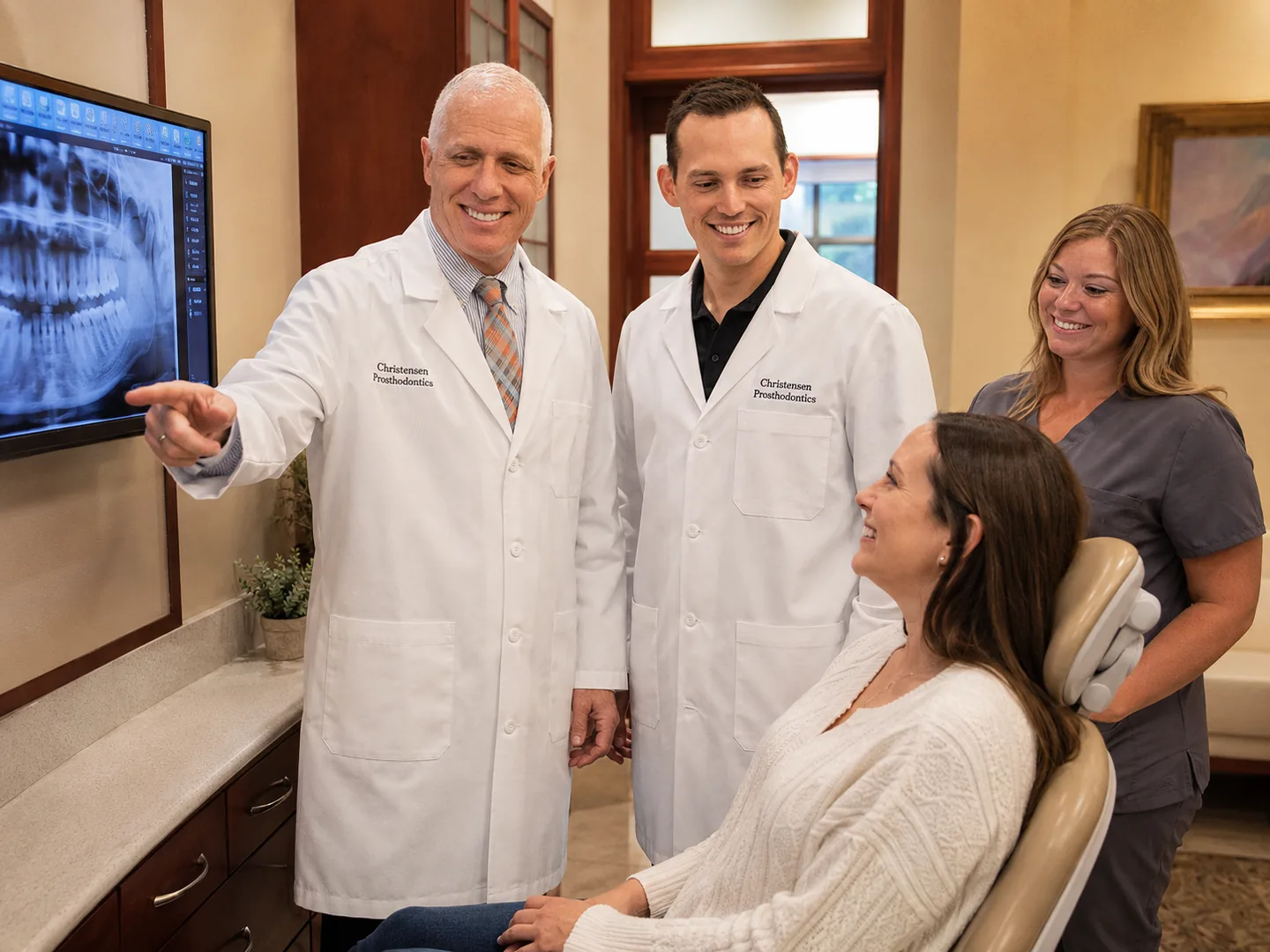
Implants aren't for every situation. They often help when one of these sounds like you. Not sure where you fit? That's exactly what a consultation is for. We'll tell you honestly whether implants are a good fit for you.
You're missing one tooth, several teeth, or all of them.
A bridge or denture you have now feels loose, or makes eating hard.
You want a replacement tooth that stays put, not one you take out at night.
You've been told you don't have enough bone, and you're not sure what's next.
You've put off treatment because past dental work didn't go the way you hoped.
You want one clear plan, explained, before you decide anything.
The pathway
How does the dental implant process work?
Every step is explained before it happens, so you always know where you are and what comes next.
1
Consultation and imaging
We listen, examine, and take the images needed to understand bone, bite, and restorative options. Typically one visit.
2
Treatment plan
You receive a written plan that explains the sequence, timeline, cost, and recommended approach.
3
Implant placement
The implant post is placed in the jaw to act as the replacement tooth root. Your written plan explains what this visit involves.
4
Healing
The implant integrates with the bone over time. Temporary options are discussed when needed. This usually takes several months as the implant integrates with the bone.
5
Final restoration
A crown, bridge, denture, or full-arch restoration is attached and adjusted for comfort and function. Usually one to two visits once healing is complete.
6
Maintenance
We review how to care for the restoration and protect the result. Ongoing, at your regular checkups.
Clear estimates before treatment
Every plan includes a written estimate up front. We'll walk you through payment options so the cost is never a surprise.
What implant patients say about their care. 4.9 stars across nearly 150 Google reviews.
★★★★★
The Crown Doctor Christensen fitted on implant worked very nicely on the first fitting and is functioning just as well as the infected tooth it replaced.
Henry T. · Google review
★★★★★
Implant tooth broke off and they got me in the next day and came up with a temporary solution and a replacement at a reasonable cost.
Bruce N. · Google review
★★★★★
They are so good at communicating what is needed and every step of what they're doing. The work is the highest quality I've been able to find.
A dental implant is a small titanium post that a dentist places in your jaw to replace the root of a missing tooth. A custom-made tooth, called a crown, attaches on top. Together they look and work much like a natural tooth. At Christensen Prosthodontics, implant care is planned and restored by prosthodontists, the dental specialists trained in replacing teeth.
Does getting a dental implant hurt?+
Most patients say getting a dental implant is more comfortable than they expected. The area is numbed during the procedure, so you shouldn't feel pain while the implant is placed. Some soreness afterward is normal and usually eases within a few days. We'll explain how to stay comfortable during healing before you begin.
How long does the implant process take?+
Dental implant treatment usually takes a few months from start to finish, because the implant needs time to bond with the bone before the final tooth goes on. Some cases move faster and some take longer, depending on your mouth and whether other treatment is needed first. We'll give you a personal timeline at your consultation.
How long do dental implants last?+
Dental implants are designed to be a long-term tooth replacement, and many people keep theirs for decades with good care. How long yours lasts depends on your health, your habits, and regular cleanings and checkups. We can't promise a specific lifespan, but we'll show you how to care for your implant so it lasts as long as possible.
Will I go without teeth while I heal?+
Not usually. A temporary tooth or denture can often be planned while the implant heals, depending on your case. We go over the options at your consultation.
Can I get implants if I've been told I don't have enough bone?+
Often, yes. Many people who were told they lack enough bone can still get implants, sometimes with a bone-building step first to create a stable base. Because our prosthodontists handle complex cases, we can review your imaging and tell you honestly what's possible for you.
What's the difference between an implant, a bridge, and a denture?+
An implant replaces a tooth root with a post in the jaw and stays in place permanently. A bridge fills a gap by anchoring to the teeth next to it. A denture is a removable set of teeth you take out to clean. Implants are the only option that replaces the root and doesn't rely on other teeth or come out at night. We'll help you compare what fits your situation.
What is a prosthodontist, and why does it matter for implants?+
A prosthodontist is a dentist with about three extra years of specialty training in restoring and replacing teeth, including implants, crowns, bridges, and full-mouth care. For implant work, that extra training matters because the final tooth has to fit, function, and look right, not just be placed. At Christensen Prosthodontics, your implant care is led by prosthodontists.
How do I get started?+
The first step is a consultation. We'll listen to your concerns, take the images we need, and tell you whether implants are a good fit, along with a clear plan and a written estimate. There's no pressure to decide on the spot. You can request a consultation online.
Does insurance cover dental implants?+
Coverage varies by plan, and many cover part of the treatment. We give you a written estimate up front and can review your benefits and payment options, so you can plan with clear numbers.
What if I need to reschedule?+
Just call the office as early as you can and we'll find a new time. We know plans change, and we'll work with you.
Related care pathways
Where implant care connects
Implant dentistry is one path among several. If your situation is bigger, or you're weighing your options, these related pathways may fit.
Full-mouth rehabilitation
A complete, sequenced plan for rebuilding a full mouth, the whole picture, not one tooth at a time.
We would like to use cookies to see how this site is used so we can improve it.
Declining changes nothing about your ability to use the site or request an appointment.
Read our Privacy Policy.