Christensen Prosthodontics provider in Orem, Utah reviewing a treatment plan on a tablet with a patient and a team member

Full-mouth rehabilitation

Full-mouth rehabilitation, rebuilt in one plan.

Full-mouth rehabilitation is the rebuilding of most or all of the teeth in one coordinated plan, instead of a series of separate repairs. When teeth are worn, broken, or failing across the mouth, treating them together is usually what makes the result last.

Est. 1976 · Orem, Utah

Why it matters

When one decision affects the whole bite, the plan matters as much as the procedure.

Request a consultation

Is full-mouth rehabilitation what you actually need?

Not everyone with several dental problems needs a full-mouth plan. The question is whether the problems share a cause. If they do, treating them together is usually what makes the result last. These are the patterns that point that way.

  • Teeth across your mouth are worn short, flattened, or chipping.
  • Dental work keeps breaking, loosening, or needing repair.
  • You have lost several teeth in different parts of the mouth.
  • Your jaw muscles ache, or your bite feels like it has changed.
  • You avoid chewing on one side, or avoid certain foods altogether.
  • You have been told you need a lot of work, and you want one plan instead of a list.

The pathway

How a full-mouth plan comes together.

This is deliberate work. The planning stage is longer than most people expect, and that is exactly why the result holds.

1

Consultation

We listen to the history first, including what has already been tried. Then we examine your teeth, gums, bite, and jaw joints, and take the records we need.

2

Diagnosis and design

We work out why things are failing, not just what is failing, and design the finished bite before any tooth is touched.

3

Written plan and sequence

You receive the plan in writing, in phases, with the order, the timeline, and the cost. You decide what to do and when, and phases can be spread out.

4

Foundation first

Anything that threatens the result comes first, such as gum health, teeth that cannot be saved, or implants that need time to heal.

5

Rebuilding

Crowns, bridges, implants, and dentures are placed in the planned sequence, testing the new bite along the way rather than at the end.

6

Maintenance

We review the result, protect it, often with a night guard, and set a rhythm for keeping an eye on it. Work this size is meant to be maintained, not redone.

A word about time

This is not a weekend project.

A full-mouth rehabilitation usually runs over months rather than weeks, and the exact length depends on healing, on how many phases there are, and on the pace you choose. Some patients complete it in stages over a year or more, for practical and financial reasons. That is a normal way to do it.

What does not change is the order. The plan comes first, and every phase is built to fit the one after it. If you are weighing whether a specialist is the right call, the American College of Prosthodontists explains why patients are referred to a prosthodontist.

See what to expect
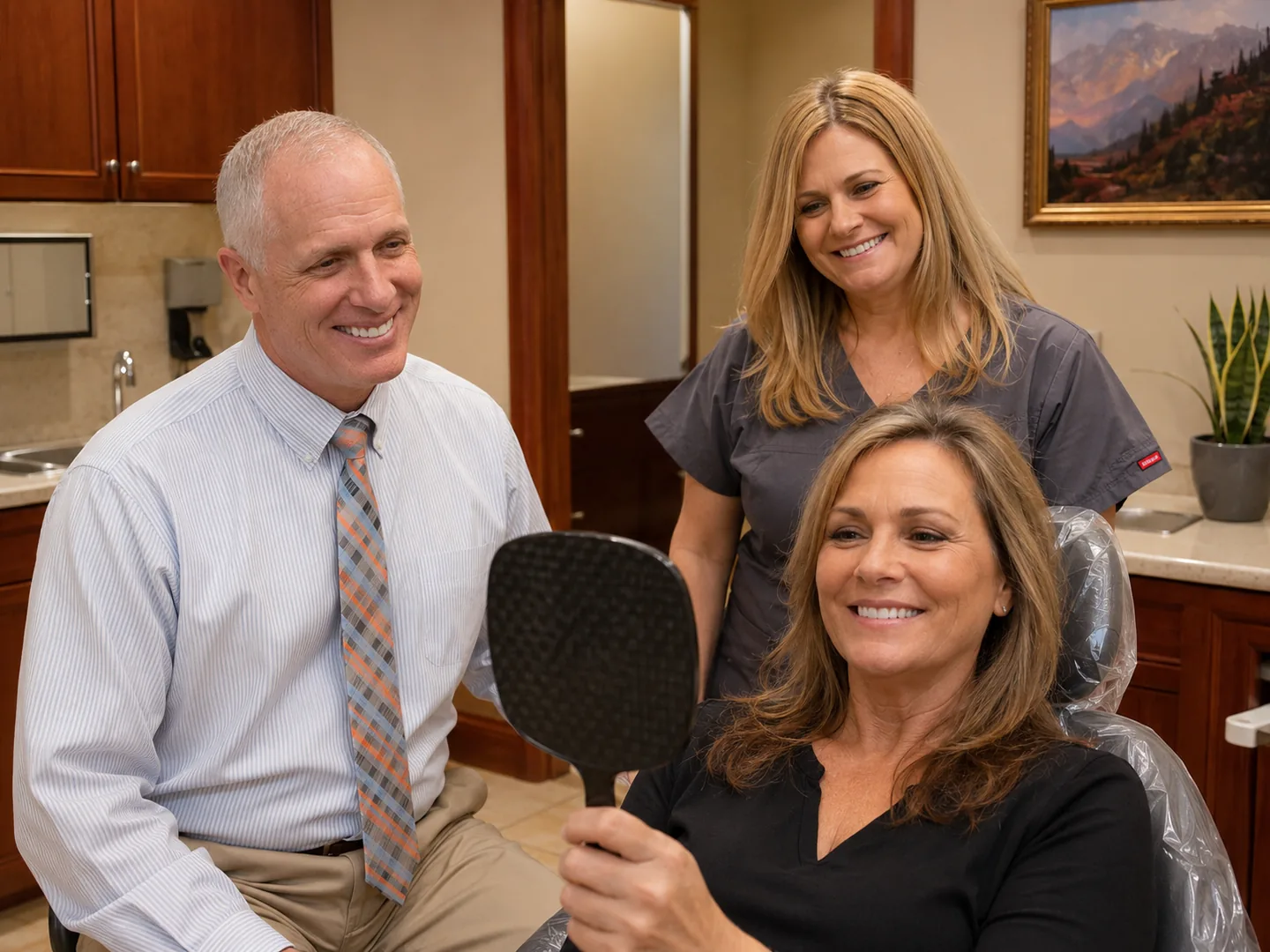
Christensen Prosthodontics patient checking a restored tooth in a hand mirror in Orem, Utah
Christensen Prosthodontics doctor and care team speaking with a patient in Orem, Utah

A written estimate before treatment starts

Cost depends on what your mouth actually needs, so we do not quote a number before we have looked. After your consultation you get a written plan with the cost in it, and we walk you through insurance and payment options.

See payment & financing →

Common questions

Questions about full-mouth rehabilitation

What is a full-mouth rehabilitation?
It is the rebuilding of most or all of the teeth in one coordinated plan, rather than as separate repairs. It can combine crowns, bridges, implants, and dentures, and it is designed around your bite so the finished result works as a whole. At Christensen Prosthodontics in Orem, Utah, this work is planned and delivered by prosthodontists.
How long does full-mouth rehabilitation take?
Most cases run over several months, and some are deliberately spread across a year or more in phases. The length depends on healing time, whether implants or extractions are involved, and the pace you choose. Your written plan lays out the sequence and the expected timeline before you begin.
How much does full-mouth rehabilitation cost in Orem, Utah?
The cost varies a great deal, because no two mouths need the same combination of treatment. We do not quote a figure before examining you. After your consultation you receive a written plan with the cost broken out by phase, which also makes it easier to spread treatment over time.
Does insurance cover full-mouth rehabilitation?
Dental plans commonly cover parts of the work, such as individual crowns or extractions, while yearly maximums mean a plan of this size usually exceeds what insurance pays in a single year. Phasing treatment across benefit years can help, and we go through the details with you before you commit.
Will my teeth look natural afterward?
That is the goal, and it is planned rather than left to chance. The shape, length, and color of the teeth are designed before the final restorations are made, and you approve the appearance along the way.
Do I need a referral for full-mouth rehabilitation?
No. Some patients are referred by their own dentist and others come to us directly, and both are welcome. If you have a general dentist you like, we are glad to coordinate with them and send you back for your routine care.

Related care pathways

What a full-mouth plan may include

Full-mouth rehabilitation is not a single procedure. It is these pieces, arranged in the right order.

Dental implants

Replacing missing teeth with a stable foundation for the rest of the plan.

See implant care

Dentures

Full, partial, and implant-supported options where teeth cannot be saved.

See the pathway

You do not need a referral

Many patients come to us from their own dentist. Many find us on their own. Either way is welcome, and we are glad to work alongside the dentist you already see.

Request a consultation →

A clearer path forward

One conversation, then a plan.

You do not have to decide anything at the consultation. You will leave understanding what is happening in your mouth and what the options are.